MSP Request Forms that Produce Complete Tickets, Not Follow-Up Emails
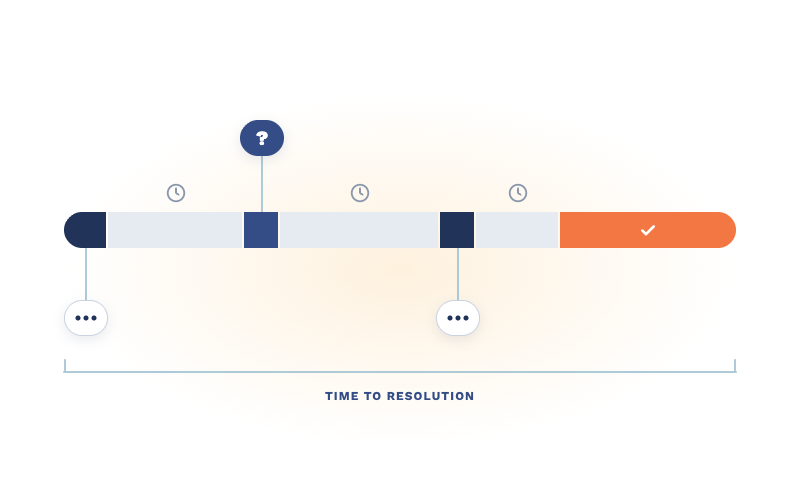
Every MSP has a ticket that reads "new hire starting Tuesday, needs a laptop." It's not wrong. It's just not finished.



Enterprise-grade infrastructure with the flexibility MSPs demand

Perfectly tailored AI that knows your specific MSP

Build your own Shopify-like store with your PSA products & distributors

Have clients to submit tickets directly to your PSA, freeing up your team's time

Pre-triage and route tickets correctly with the help of AI

Everything you need to start automating, no code required.
5 min read
Those are two completely different decisions, with two completely different cost structures, two completely different risk profiles, and two completely different outcomes five years from now. Getting the wrong one is expensive. Not "we lost a sprint" expensive. "This is now a permanent line item" expensive.
Every internal AI build starts the same way. Someone on your team is sharp, motivated, and a little tired of watching tickets pile up. They spin up a script that reads ticket descriptions and suggests a category. It works. Everyone's thrilled.
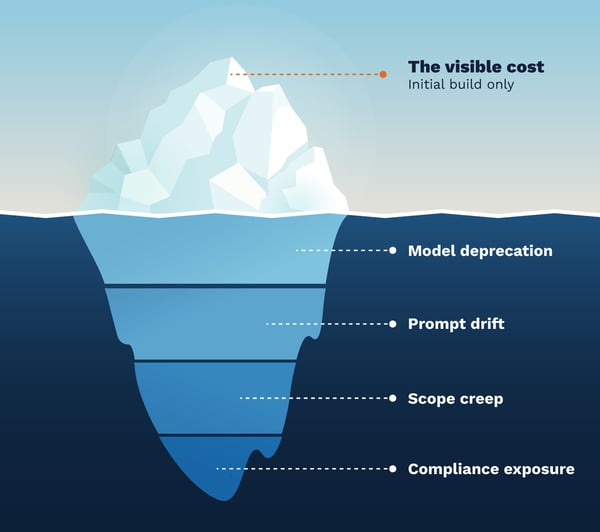
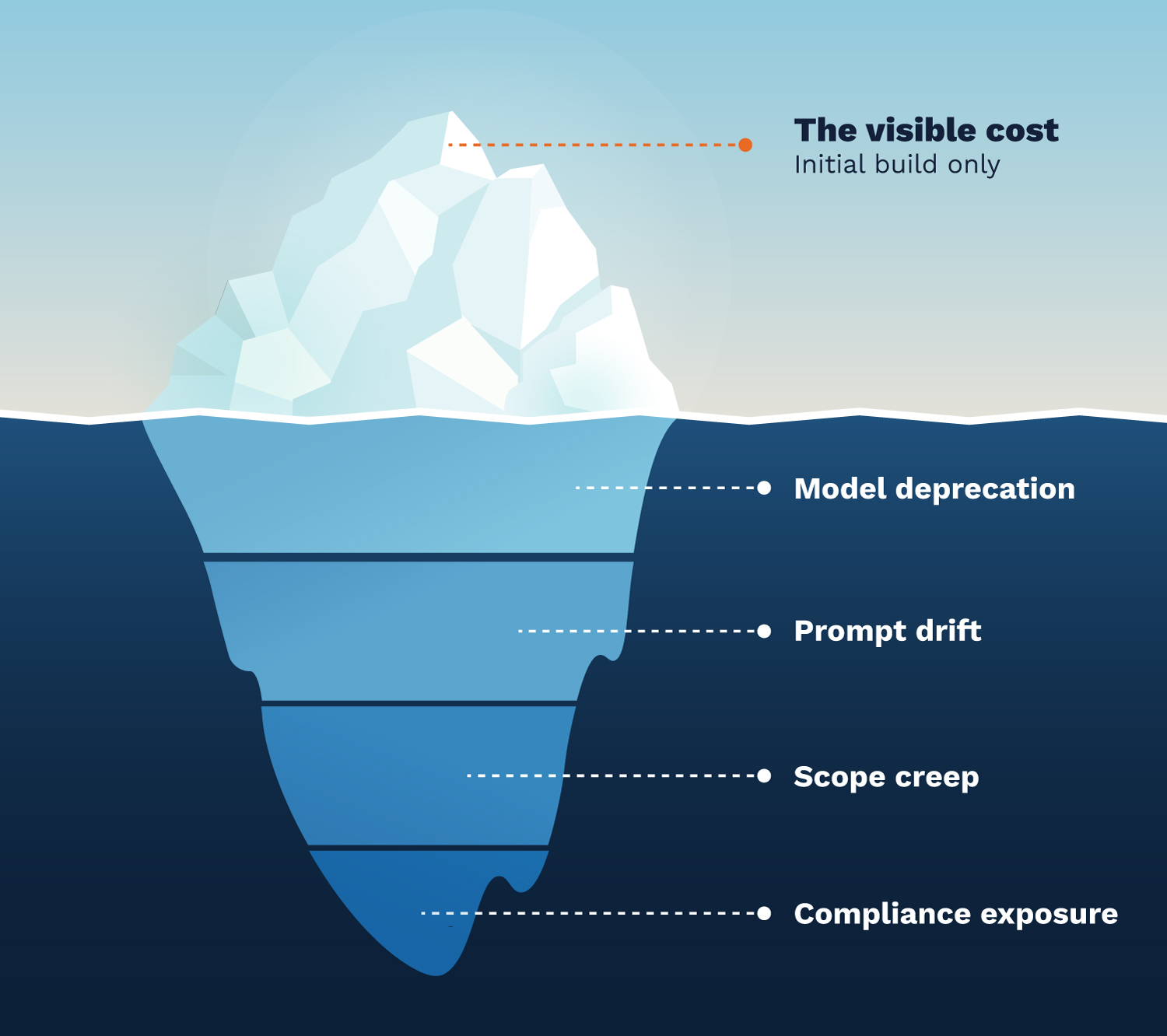
That's the tip of the iceberg. What's underneath is the part nobody budgets for:
None of this shows up in the initial "how long would this take to build" estimate. It shows up eighteen months later, in the quiet realization that three people now spend part of every week keeping a tool alive that was supposed to save time.
The honest way to price a build isn't "cost to ship." It's cost over five years: engineering time to build it, engineering time to maintain it, the opportunity cost of what that team could have shipped instead, and the ongoing security and compliance work that comes with owning a system that touches client data end to end.
Most internal AI tools never get priced that way. They get priced like a project. They should be priced like a product, because that's what they become the moment they touch a client's ticket.
Before your team builds anything AI-powered, run it through three questions.
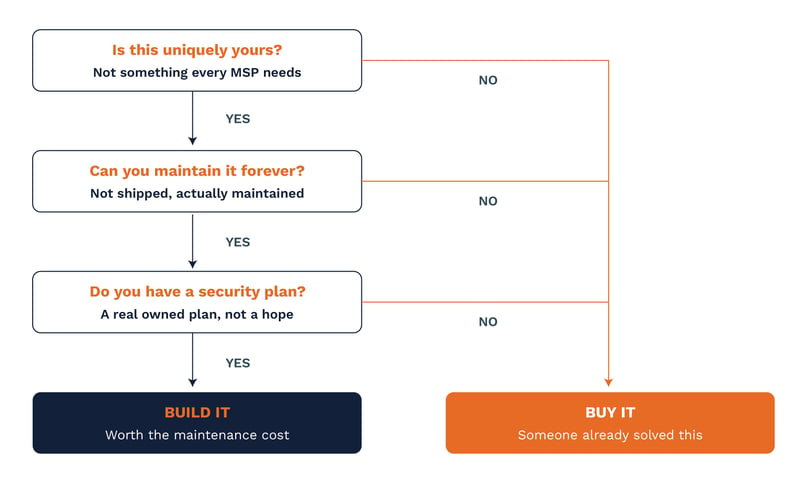
Is this uniquely yours? Is this a capability that differentiates how you serve clients, something no off-the-shelf tool captures? Or is it something every MSP needs, already solved and refined by someone whose full-time job is maintaining it?
Can you maintain it forever? Not "can you ship it." Can you keep it running, accurate, and secure for as long as clients depend on it, even after the person who built it moves to a different project?
Do you have a real plan for security and compliance? Not "we'll figure it out." An actual plan, owned by someone, for what happens when this tool touches client data and a client asks how it's protected.
If you can't answer all three with confidence, you're not ready to build. That doesn't mean you're not ready for AI. It means you're ready to buy the part that's already solved, and save your build effort for the part that's actually yours.
This isn't a novel idea. It's the rule most profitable software companies already follow: build the thing that makes you different, buy the thing everyone needs. MSPs get to apply the same logic to their own service delivery.
Ticket triage, categorization, and routing aren't where your competitive advantage lives. Nobody picks an MSP because of how tickets get tagged. That's infrastructure, worth buying the same way you buy a PSA instead of building one.
Something narrower can clear all three questions.
Take an MSP that's spent a decade serving nothing but credit unions, and has learned, ticket by ticket, exactly which language shows up in NCUA audit findings and which resolutions actually satisfy examiners. A small internal tool that flags tickets likely to surface in the next audit, built on that specific knowledge, passes all three tests: it's not something a general triage tool would ever think to look for, a two-person team can maintain it because the scope stays narrow, and the compliance plan isn't new work, it's the same regulatory framework the MSP already operates inside every day. That's a build worth doing.
What's actually yours, in cases like that, is knowledge a script can't buy off a shelf. For most MSPs, most of the time, that kind of knowledge lives in people rather than in code: the judgment your senior techs bring to a hard problem, the relationship your account managers build during a renewal conversation. Build energy belongs there before it belongs in a triage script, unless you're the rare shop with something as narrow and defensible as the audit example above.
Your clients don't outsource IT to you because you're cheaper than an internal hire. They outsource it because you're the expert, and being the expert means knowing where to spend your attention.
Build vs. buy is really asking the same thing about your own business: where is your team's expertise best invested? In maintaining a triage script, or in the parts of client service a script can't replicate?
ServiceAI, CloudRadial's service desk intelligence layer, is a useful case study for this exact framework, less as a pitch and more as an example of "buy what's table stakes, keep what's yours" in action. It handles the triage, categorization, and routing work that isn't unique to any single MSP, grounding every answer in that MSP's own ticket history and documentation rather than a model trained across partners. Each MSP's data stays isolated to their own instance, and canceling a subscription removes the ingested data rather than retaining it. What it doesn't do is decide, on its own, that a ticket is resolved. That judgment call stays with your team, which is exactly where it should.
Before your MSP writes a line of code or signs a contract, run the decision through the framework: what's uniquely yours, what you can actually maintain, and what your compliance plan really is. The tool comes after the answer, not before it.
Want to see what "buy what's table stakes" looks like from the inside? Book a demo of ServiceAI and see how much of the triage workload it takes off your service desk, so your team's time goes toward the work only they can do.
Want to see more on this topic? Watch our recent webinar with Ricky Cecchini as he uses a real MSP scenario to walk through this decision.
Should MSPs build their own AI tools or buy an existing platform? It depends on whether the tool creates value unique to your MSP. Capabilities like ticket triage and categorization are widely available and expensive to maintain in-house; capabilities tied to your specific client relationships and expertise are worth building.
What does building an AI tool in-house actually cost? More than the initial build. Ongoing costs include maintenance, model updates, quality assurance as accuracy drifts over time, and the compliance work required once client data flows through it.
What questions should an MSP ask before building an AI tool? Three: Is this uniquely valuable to how you serve clients, or table stakes? Can your team maintain it indefinitely, not just launch it? Do you have a real, owned plan for its security and compliance?
Every MSP has a ticket that reads "new hire starting Tuesday, needs a laptop." It's not wrong. It's just not finished.
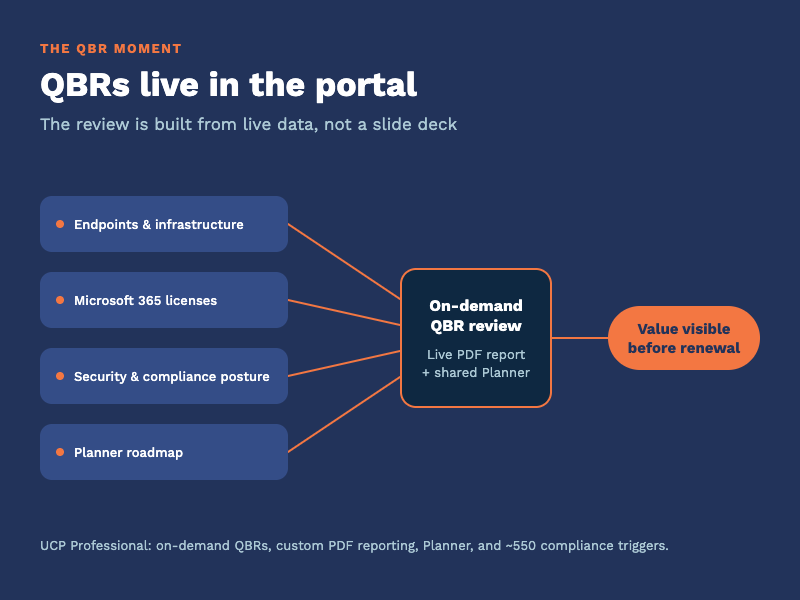
Every quarter you sit across from a client and answer one question, spoken or not: what are we paying you for? The quarterly business review is where...
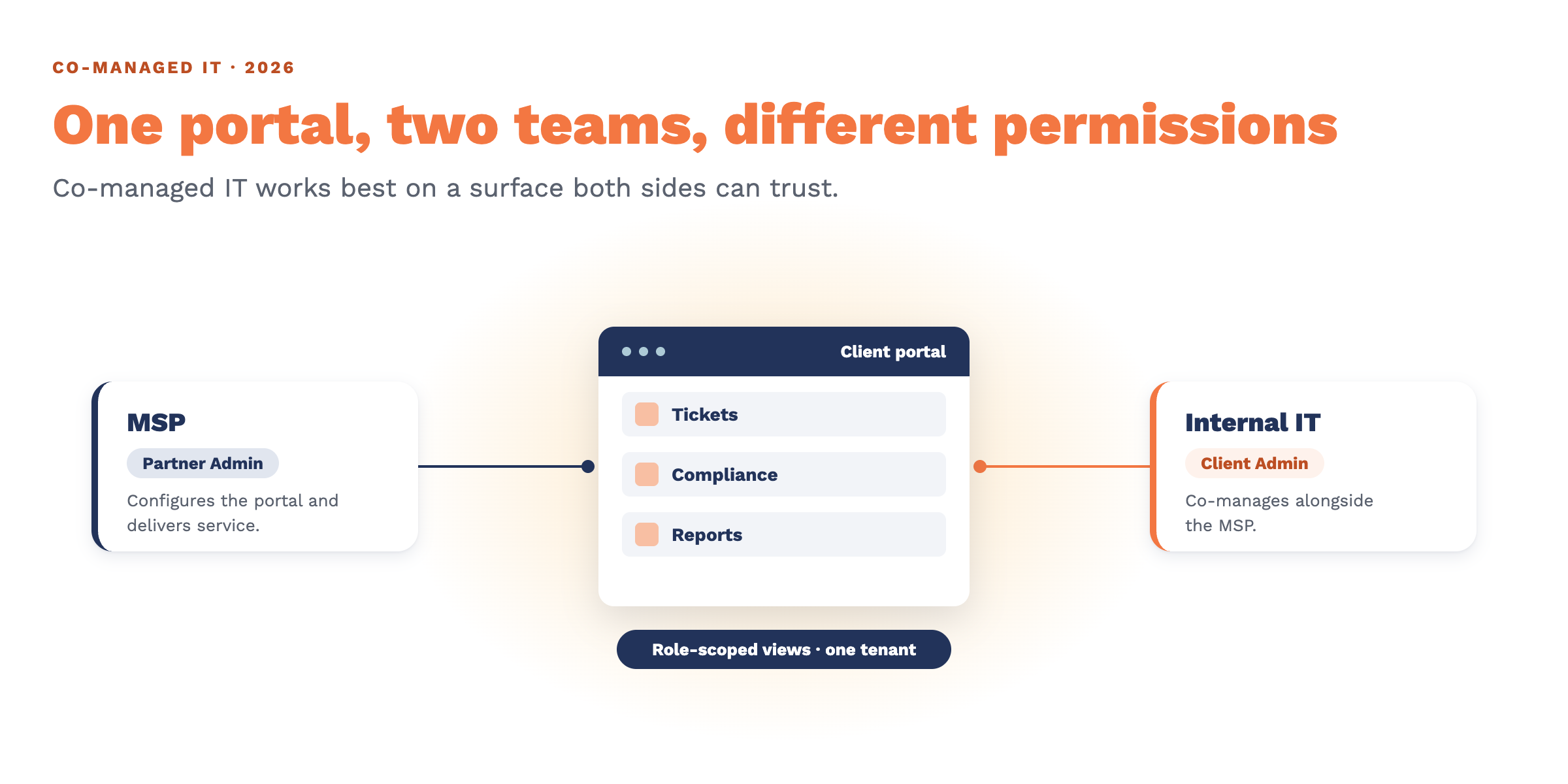
Co-managed IT is one of the fastest-growing shapes an MSP relationship can take, and it breaks a quiet assumption most service desks are built on:...